Field Notes · Note
The Balcony Soil Trap: How to Improve Aeration in Container Gardens
Urban potted plants face a silent threat: compacted soil. Discover why balcony gardens suffocate without proper aeration, and how organic matter restores root respiration.
- Written by
- The GAUMAYA Team
- Published
- 25 May 2026
- Reading time
- 3 min
- Filed under
- Field Notes
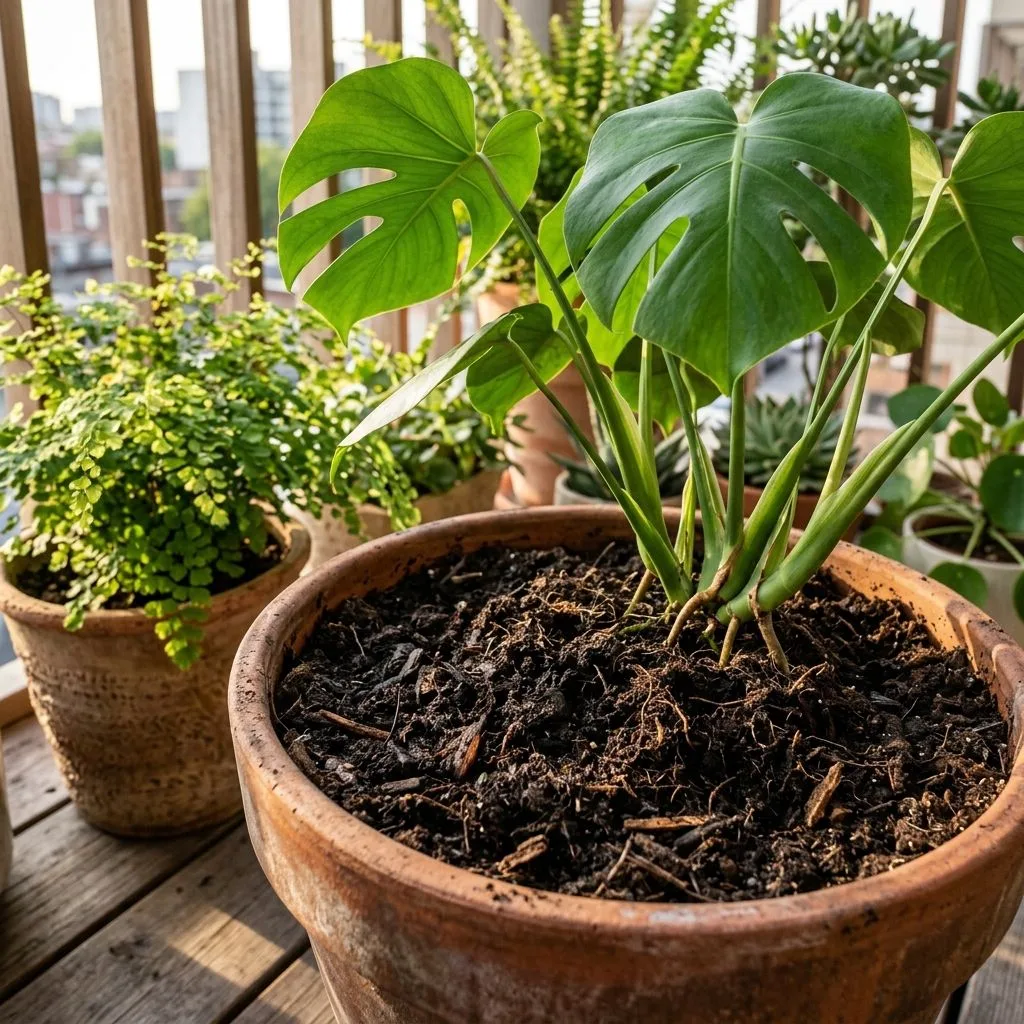
Container gardening on a balcony is a beautiful way to bring nature into urban spaces. But pots are not miniature patches of open earth. They are closed environments. In the ground, soil is kept loose and aerated by earthworms, burrowing insects, deep-reaching roots, and natural cycles of decay. In a balcony pot, none of these forces exist. Instead, gravity and repeated watering create a downward force that slowly packs soil particles together.
This is the balcony soil trap: over a few months, what started as fluffy potting mix turns into a dense, compacted brick
Why Aeration Matters to Potted Roots
We often think of roots only as anchors that drink water. In reality, roots are living tissues that need to breathe. They absorb oxygen from the micro-pockets of air between soil particles and release carbon dioxide.
When soil becomes compacted, these air pockets disappear. When you water a compacted pot, the water pools on the surface, drains slowly, and fills every remaining pore space, trapping stagnant moisture. Without oxygen, roots cannot perform cellular respiration. Within days, they begin to suffocate and rot, leading to yellowing leaves, dropping foliage, and eventually the death of the plant.
In container gardening, compaction is the silent precursor to root rot. If the soil cannot breathe, the roots cannot drink.
— The GAUMAYA Team

How to Diagnose and Treat Compaction
Before repotting your entire balcony garden, look for these three clear signs of soil compaction:
1. Water Pooling: When you water, the liquid sits on top of the soil for more than a few seconds before slowly sinking in.
2. The Shrinkage Gap: The soil has dried into a hard block that shrinks away from the inner walls of the pot, letting water run straight down the sides without wetting the root ball.
3. Stunted Vigor: Your plants show pale new growth or drooping leaves despite regular watering and feeding.
To restore airflow, start with mechanical aeration: take a clean chopstick or wooden dowel and gently probe the soil in several spots around the pot, going about three to four inches deep. This physically creates channels for air and water to enter.
The Biological Fix: How Vermicompost Rebuilds Structure
Mechanical aeration is a temporary band-aid. To prevent compaction from returning, you must rebuild the soil’s physical structure. In nature, this is done by organic matter.
Adding high-quality, pure vermicompost is the most effective way to improve urban soil aeration. Earthworm castings are not just nutrients; they are stable humic structures. During digestion, earthworms coat organic matter in mucus, binding microscopic particles into stable aggregates. These aggregates create a textured, crumbly soil structure. The spaces between these crumbs act as macro-pores that allow air to circulate freely, while the organic matter holds moisture without waterlogging.
Furthermore, vermicompost introduces billions of beneficial bacteria and mycorrhizal fungi. These microbes form symbiotic relationships with roots, trading nutrients they mine from the soil for sugars produced by the plant. They act as an extended root system, bringing water and minerals from feet away.
The Purity Standard for Balcony Spaces
For indoor and balcony gardeners, standard manures are rarely an option due to odor, flies, and raw pathogens. This is why a fully cured, odorless organic fertilizer is essential.
GAUMAYA is crafted over 70+ days to ensure complete stabilization. This extensive curing process breaks down raw organic components completely, resulting in a dark, crumbly amendment (learn more about this in our guide to the forest floor odor test) that smells exactly like fresh forest rain.
To apply, simply top-dress your balcony pots with a 1-inch layer of GAUMAYA vermicompost, gently working it into the top two inches of soil before watering. This simple step feeds your soil food web, optimizes nutrient uptake, and ensures your container roots have the oxygen they need to thrive.
- Balcony Gardening
- Soil Aeration
- Indoor Plants
- Vermicompost
- Container Gardening