Field Notes
The Odor Test: Why Premium Vermicompost Smells Like the Forest Floor
If your vermicompost has a sour, pungent, or chemical smell, something is wrong. We explain why mature, fully cured vermicompost should only carry the clean aroma of fresh forest soil.
- Written by
- The GAUMAYA Team
- Published
- 1 June 2026
- Reading time
- 2 min
- Filed under
- Field Notes
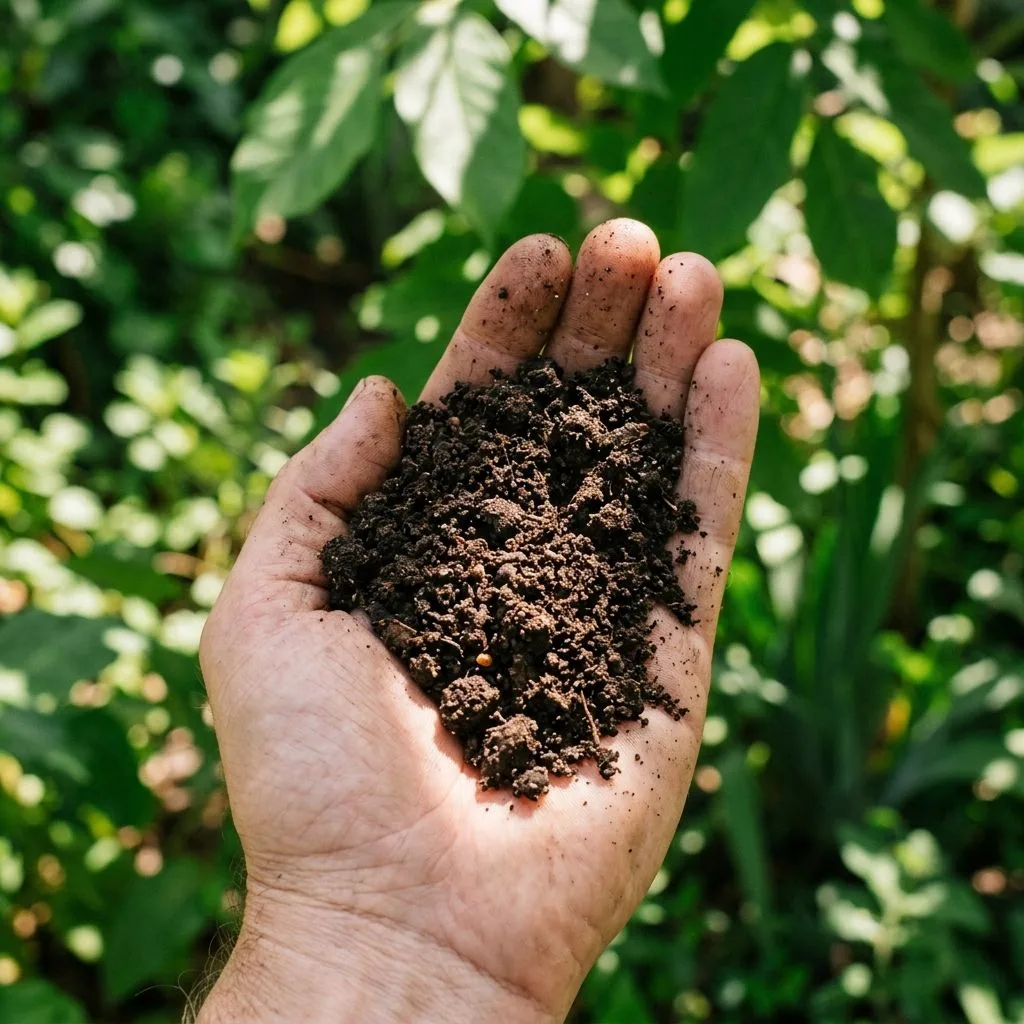
There is a common misconception that organic fertilizers must smell unpleasant to be effective. Gardeners often brace themselves when opening a new bag of compost, expecting a pungent, sour, or overly ammonia-like odor. However, with premium, fully cured vermicompost, the opposite is true. It should carry only one distinct scent: the clean, deep aroma of a forest floor after the first rain.
The Science Behind the Scent
That rich, earthy scent is not a cosmetic detail; it is a biological indicator. The primary compound responsible for this smell is geosmin, an organic compound produced by certain classes of active soil microbes, particularly actinomycetes. These beneficial microorganisms thrive in aerobic, highly structured environments—the exact conditions present in a healthy vermicomposting bed (read our explanation of what NPK actually means to understand the role of soil biology).
When earthworms digest raw organic matter, their gut biology transforms the material, neutralizing pathogens and lining the casts with plant-available nutrients. As the compost is allowed to cure and mature over our 70+ day cycle, these microbial colonies stabilize. The presence of a clean, forest-like smell is proof that the biological curing process is complete, and the microbial life is active.
What Bad Odors Reveal
Conversely, a strong, sour, or putrid odor indicates unfinished business. If a compost pile is rushed, packed before it is fully digested, or allowed to become waterlogged and anaerobic (lacking oxygen), different bacteria take over. They produce volatile fatty acids and ammonia, resulting in a pungent smell.
Applying unfinished, foul-smelling compost to your plants can do more harm than good. The unstable organic matter continues to break down in the pot, drawing nitrogen away from your plant's roots and creating a localized environment that can invite root rot.
Our Approach at Narnaul
At the GAUMAYA gaushala in Narnaul, southern Haryana, we monitor our curing beds daily. We ensure that our vermicompost is never rushed. By maintaining optimal moisture and natural aeration throughout the 70+ days of production, we allow the earthworms and actinomycetes to complete their work. The result is a clean, dry, and granular amendment (as detailed in our double-sifting process) that smells only of life and earth.