Field note
The Texture of Time: Why We Sift Our Vermicompost Twice
Before a single bag of GAUMAYA leaves our Narnaul farm, it passes through a rigorous double-sifting process. We explore why a uniform, tea-like texture is the hallmark of mature vermicompost.
- Written by
- The GAUMAYA Team
- Published
- 31 May 2026
- Reading time
- 1 min
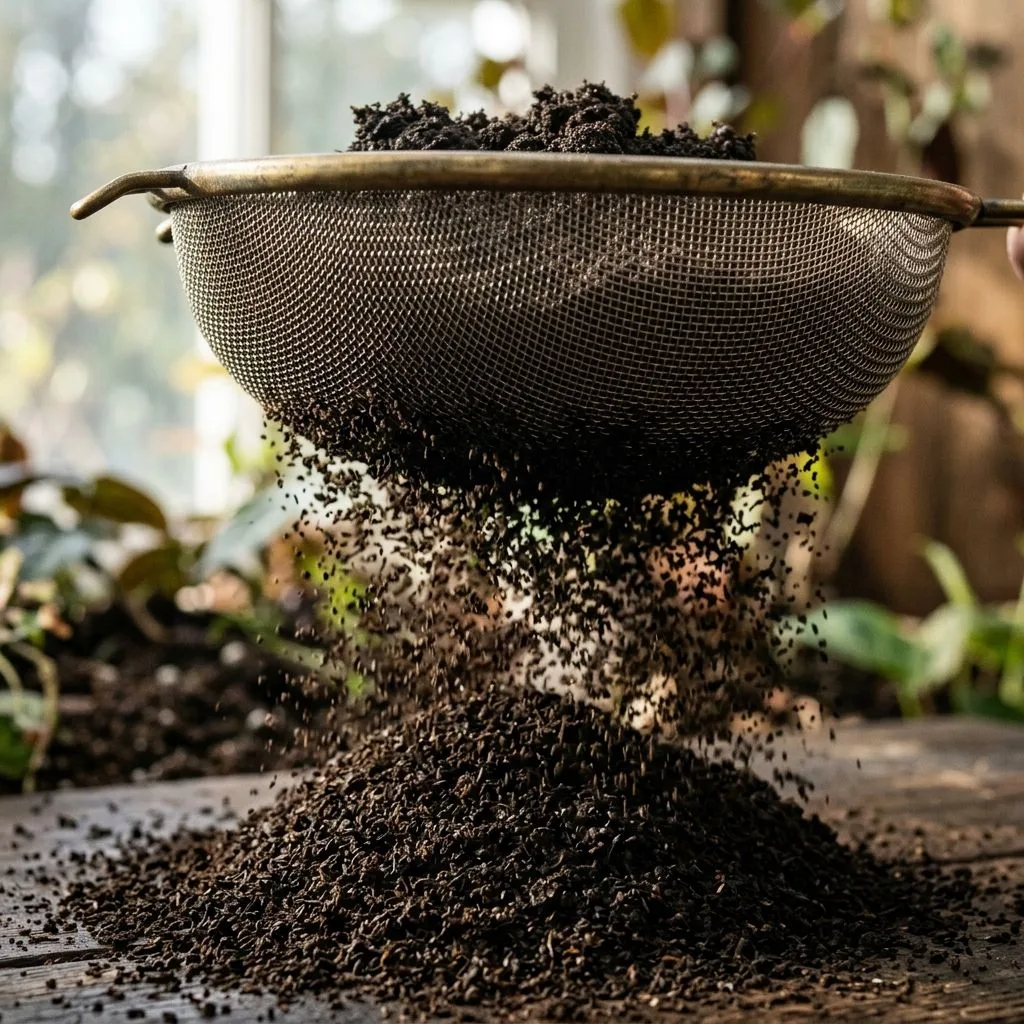
Many commercially available organic fertilizers contain large, undigested chunks of manure, twigs, and uncomposted debris. While this adds weight to the bag, it does little for the soil. True vermicompost should look and feel like used tea leaves—dark, uniform, and light to the touch.
At our farm in Narnaul, achieving this texture is not left to chance. It is the result of patience in the curing beds and a strict double-sifting protocol during the harvest.
The First Pass: Separating the Bed
After the 70+ day curing period, the top layer of the bed is carefully harvested. The first sifting uses a wider mesh. This step is designed primarily to separate the earthworms (Eisenia fetida) from their casts without causing them stress, allowing them to be gently returned to new beds. It also removes larger undecomposed material like stubborn stalks.
The Second Pass: The Refinement
The second sifting is where the quality of GAUMAYA is defined. We use a fine 2mm mesh to filter the harvested material. This meticulous process removes any remaining cocoons and tiny undecomposed fragments.
What falls through the mesh is pure, 100% worm cast.
Why Texture Matters
A fine, uniform texture ensures that the compost integrates seamlessly with your potting mix. It prevents the soil from clumping, improves aeration around the root zone, and ensures that the water-holding capacity is evenly distributed throughout the pot.
We sift twice because we believe that restoring your soil should not require you to pick out twigs and debris. The result is an incredibly dense, nutrient-rich amendment that is immediately available to your plants.