Field note
The 70+ Day Standard: Why Real Vermicompost Cannot Be Rushed
In an industry optimized for speed, true soil restoration requires time. We explore why our beds in Narnaul are left undisturbed for a minimum of 60 days before the first harvest.
- Written by
- The GAUMAYA Team
- Published
- 30 May 2026
- Reading time
- 1 min
The industry average for vermicompost turnover is 30 to 45 days. It is a timeline designed for maximum volume and rapid cash flow. But biology does not respect fiscal quarters.
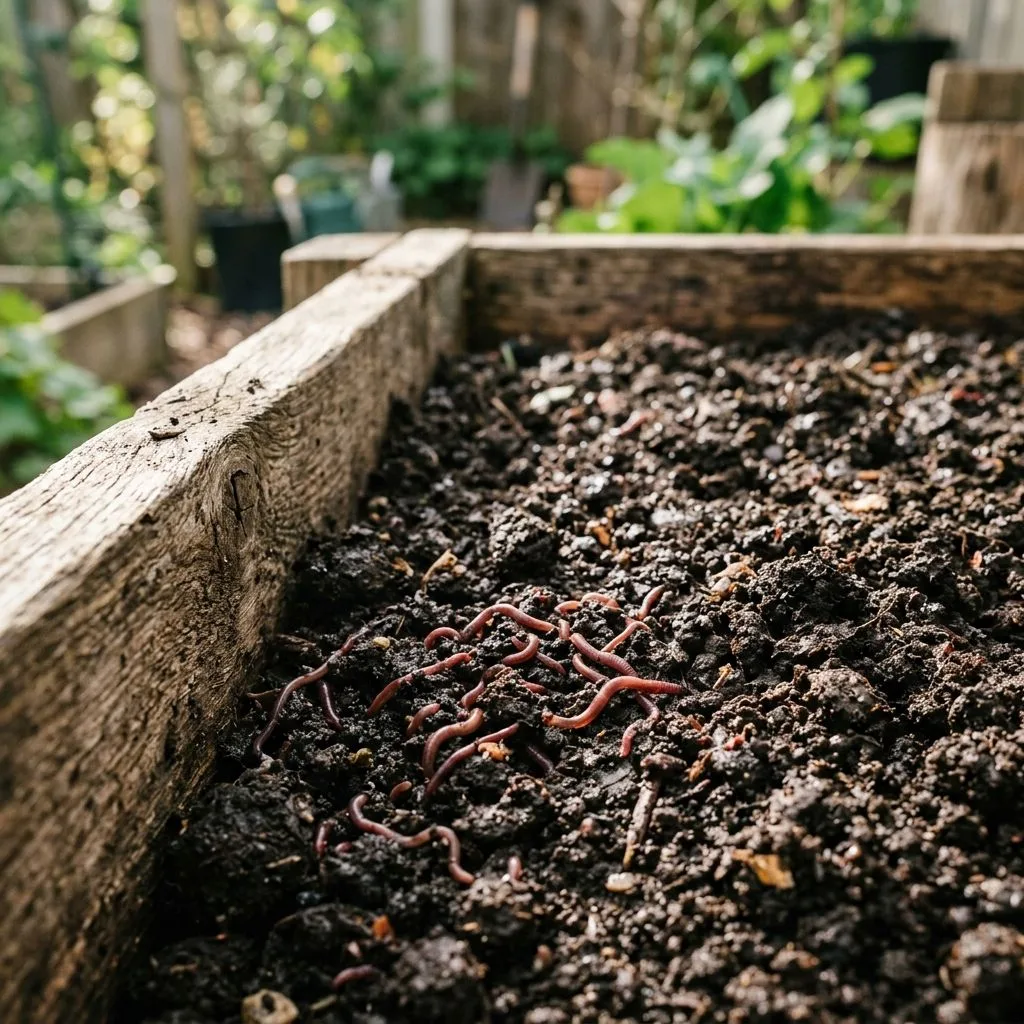
When we set up the beds at our farm in Narnaul, we committed to a different timeline: a strict 70+ day curing period. This is not an arbitrary number; it is the biological baseline required for earthworms (Eisenia fetida) to fully process the cow manure and organic matter into a mature, stable cast.
The Problem with Rushed Compost
When vermicompost is harvested too early, the organic matter is only partially digested. This premature harvest presents several issues:
- Incomplete breakdown: The material can continue to decompose in your pots, generating heat that can damage delicate root systems.
- Lower microbial count: The curing phase is when beneficial bacteria and fungi multiply. Rushing the process significantly lowers the microbial density.
- Fewer humic acids: Time is the primary catalyst for the development of humic and fulvic acids, which are essential for nutrient absorption.
The GAUMAYA Process
Our beds are monitored for moisture and temperature, but otherwise, they are left strictly alone. We do not force the pace. By extending the cycle to a minimum of 70+ days, we ensure that every ounce of material has passed through the earthworm’s digestive tract.
The result is a dark, odorless, and highly stable soil amendment. It is rich in biology and immediately available to the plant. It takes twice as long to produce, but soil restoration is a generational effort. There are no shortcuts.