Field Notes
What Does NPK Actually Mean — and Why It’s Not the Whole Story
Those three numbers on fertilizer bags look like a shortcut to plant growth. But focusing only on Nitrogen, Phosphorus, and Potassium leaves out the real engine of soil health.
- Written by
- The GAUMAYA Team
- Published
- 25 May 2026
- Reading time
- 3 min
- Filed under
- Field Notes
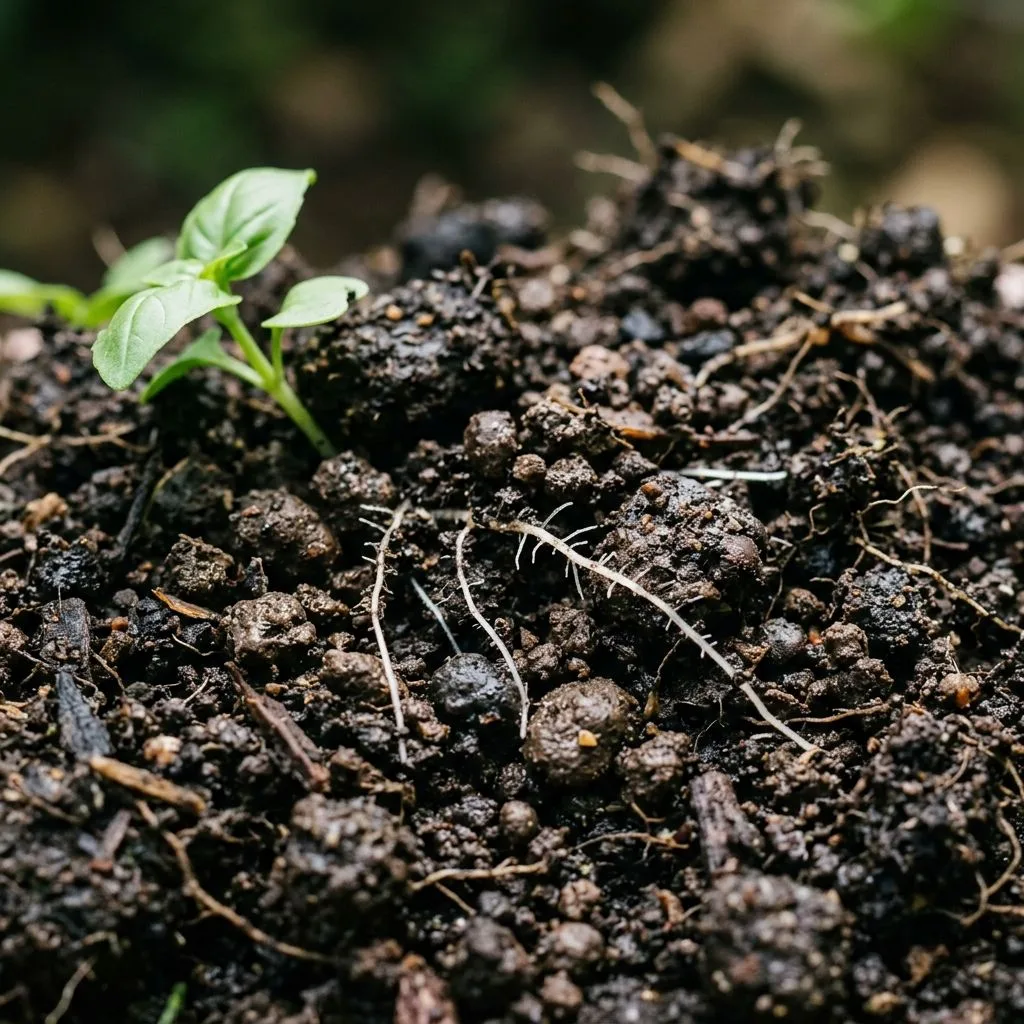
When you walk into a nursery or look at a bag of fertilizer, three bold numbers stare back at you: 10-10-10, 19-19-19, or perhaps 4-1-2. This is the NPK ratio. For decades, home gardeners and commercial farmers alike have treated these numbers as a simple cheat code: feed the plant these three elements, and the plant will grow.
But this chemical-first view of plant nutrition is like living on a diet of pure multi-vitamins while ignoring real food. While nitrogen, phosphorus, and potassium are essential, they are only a fraction of the story. In fact, relying solely on synthetic NPK inputs can eventually sterilize the very soil your plants depend on.
The Big Three: What NPK Actually Does
Before looking at what’s missing, let’s understand what these three primary macronutrients do:
Nitrogen (N): The Canopy Builder. Nitrogen is the engine of green growth. It is a core component of chlorophyll, the compound plants use to photosynthesize. If your plants are pale yellow and stunted, they likely need nitrogen.
Phosphorus (P): The Anchor. Phosphorus is all about energy transfer and root development. It helps plants establish strong, expansive root systems and is crucial for flower, fruit, and seed production.
Potassium (K): The Shield. Potassium regulates a plant’s internal systems. It controls the opening and closing of stomata (the pores that breathe in carbon dioxide and release water vapor) and builds cellular strength, making plants resilient to disease, drought, and extreme temperatures.
The Missing Middle: Micronutrients and Soil Structure
While N, P, and K are needed in large quantities, a plant needs more than three elements to thrive. Standard synthetic NPK blends completely ignore secondary nutrients and micronutrients:
Secondary Nutrients: Calcium (for cell wall structure), Magnesium (the central atom in chlorophyll molecules), and Sulfur (essential for protein synthesis).
Micronutrients: Iron, Zinc, Manganese, Copper, Boron, Molybdenum, and Chlorine. These are required in tiny, trace amounts, but their absence shuts down vital enzyme pathways. For example, without a trace of Boron, plants cannot properly distribute sugars.
More importantly, synthetic NPK does nothing for soil structure. Healthy soil is a complex matrix of sand, silt, clay, and organic matter bound together into crumb-like aggregates. This structure creates pore spaces that hold both water and air. Chemical fertilizers bypass this structure entirely, delivering free-floating ions directly to the roots. Over time, without organic carbon inputs, the soil aggregates collapse, leading to compacted, lifeless dirt that can neither hold water nor sustain life.
Soil is not an empty glass waiting to be filled with chemical inputs. It is a living digestive system that needs organic carbon and microbes to function.
— The GAUMAYA Team

The Living Soil: Why Vermicompost is Different
This is where organic matter, and specifically high-quality vermicompost, changes the equation.
Unlike chemical fertilizers that feed the plant directly, vermicompost feeds the soil food web. Vermicompost contains humic and fulvic acids—complex organic molecules that act as natural chelators. They bind to insoluble nutrients in the soil and make them easily absorbable by plant roots.
Furthermore, vermicompost is teeming with billions of beneficial bacteria and mycorrhizal fungi. These microbes form symbiotic relationships with roots, trading nutrients they mine from the soil for sugars produced by the plant. They act as an extended root system, bringing water and minerals from feet away.
Reading a Lab Report
When evaluating any soil amendment or compost, the NPK ratio alone is a poor measure of quality. Instead, we look at several key parameters that indicate biological and physical maturity:
Organic Carbon (OC): The actual food source for microbes. A high organic carbon percentage (usually above 12-15% in premium compost) ensures the soil biology will thrive.
C:N Ratio (Carbon to Nitrogen): A mature compost should have a C:N ratio between 10:1 and 15:1. If it’s too high, the compost will actually steal nitrogen from your plants as it continues to decompose.
Electrical Conductivity (EC): This measures soluble salts. If it’s too high, it can burn tender roots. A balanced EC shows that nutrients are present but in a safe, slow-release form.
At GAUMAYA, we believe in radical transparency. Every curing batch we process undergoes rigorous laboratory testing to verify not just its NPK values, but its organic carbon percentage, heavy metal safety, and microbial viability.
By shifting our focus from “feeding the plant” with synthetic NPK to “building the soil” with living, organic amendments, we create resilient garden ecosystems that require less water, resist pests naturally, and grow nutrient-dense food.
- NPK
- Soil Health
- Organic Gardening
- Vermicompost
- Soil Testing